
Explore Kannapolis
Kannapolis, North Carolina
Kannapolis is its own city — incorporated, governed and planned on its own terms — stretching across two counties north of Concord along Interstate 85.
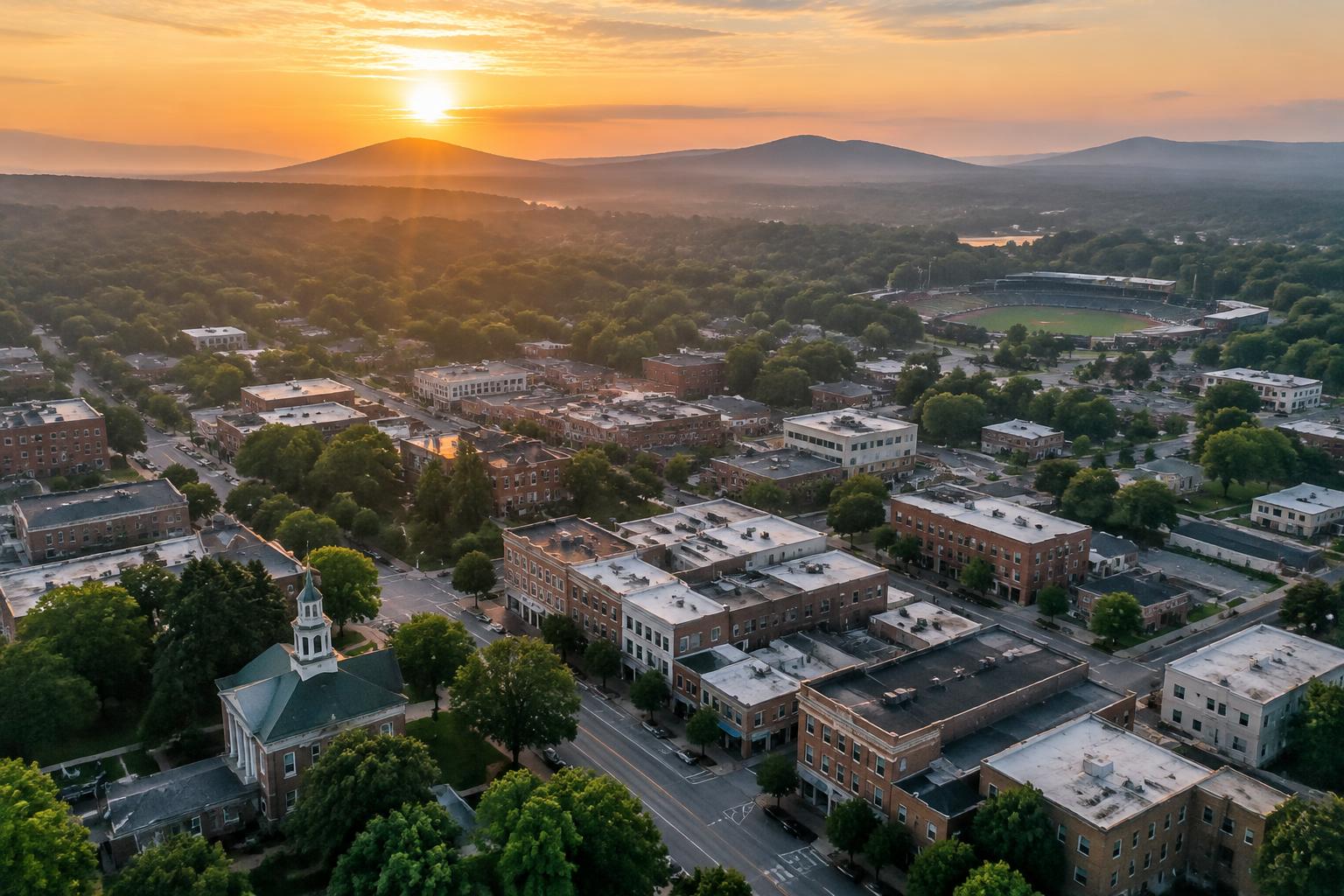
A separate city, not a Charlotte neighborhood
Kannapolis grew up as a company mill town and was not formally incorporated as a municipality until 1984. Today it has its own city council, city services and planning department. It is not a neighborhood of Charlotte, and it is not interchangeable with neighboring Concord, even though the two cities share a long border and many residents move between them daily.
Most of the city lies in Cabarrus County; a northern portion lies in Rowan County. That two-county geography shapes property taxes, school assignment, permitting and some services.
What defines the city today
- A rebuilt downtown centered on West Avenue, with public spaces and the city-owned Atrium Health Ballpark.
- The North Carolina Research Campus, built on the former Cannon Mills plant site.
- A housing stock that ranges from early twentieth-century mill-era homes to recent subdivisions and attached housing.
- Access to I-85 and an intercity passenger rail station.
Why the exact address matters
A Kannapolis mailing address does not prove a property is inside Kannapolis city limits. ZIP codes are postal routes, not municipal boundaries. Before you buy, rent or build, confirm city limits, county, school assignment and utility providers for the specific parcel.
Continue Your Research
Moving Here
City Limits & Counties
A Kannapolis ZIP code is a postal route. City limits and county lines are separate — and they're what determine your taxes and services.
Downtown
Downtown Kannapolis
Downtown is a compact, walkable district where a reworked West Avenue meets the ballpark and, a short walk away, the research campus.
History
Kannapolis History
Few American cities were shaped as completely by a single company — and few have had to reinvent themselves so publicly.
Moving Here
Moving to Kannapolis
Start with the address. Almost everything else — taxes, schools, utilities, permits — follows from it.